The Best Margaret River Wineries: Cellar Doors to Tour Around in 2026
Margaret River holds only about a hundred public cellar doors, yet more than one in five bottles of Australia's premium wine comes from this one corner of the state's south west. Picking which doors to spend a day on is the real question.
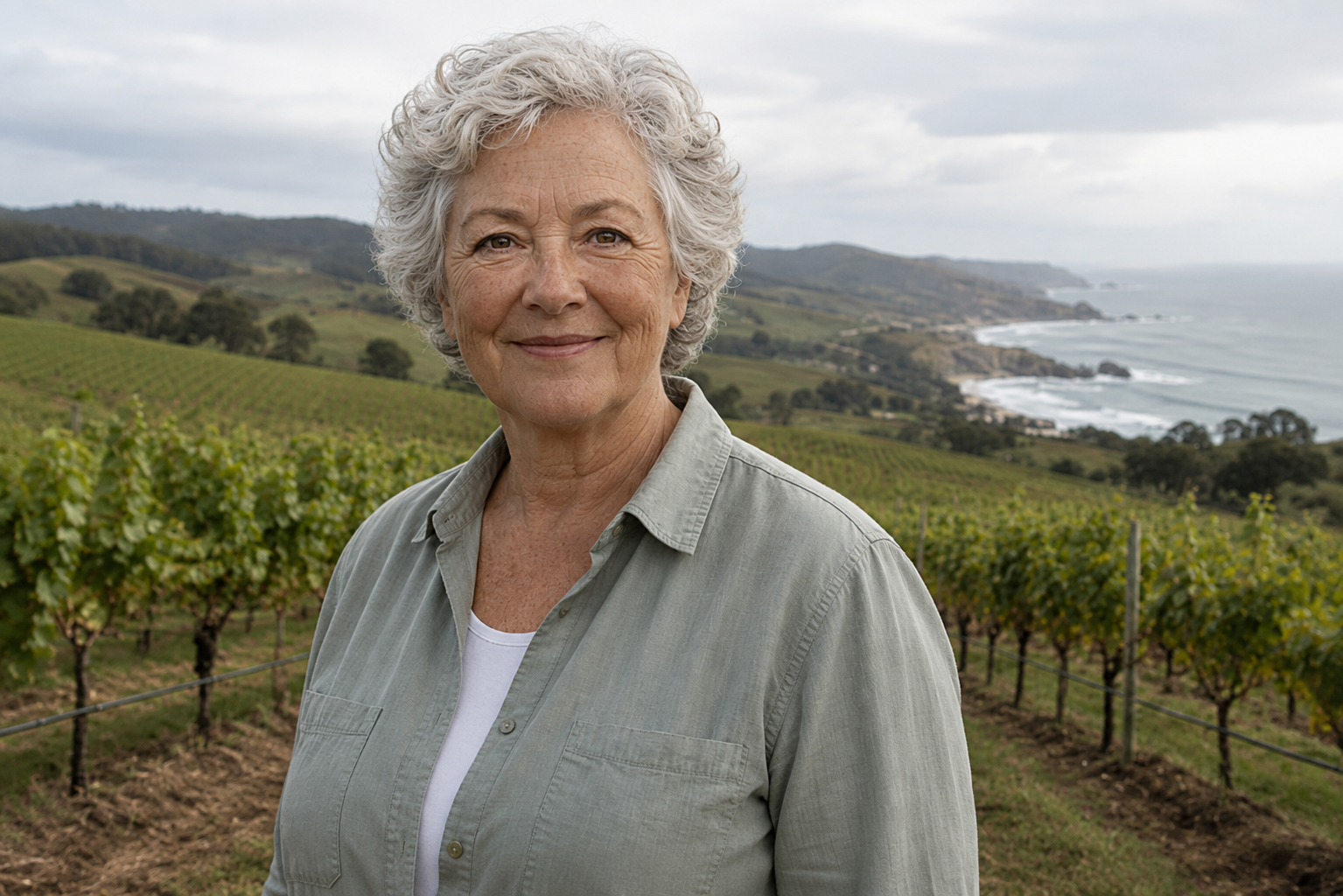 By Helen Walsh, Margaret River wine tour specialist, guiding the region since 2012
Short answer
The names that keep winning at Decanter and Halliday anchor most tour routes: Vasse Felix, Cullen, Moss Wood, Xanadu, Leeuwin Estate and Cape Mentelle among them. Cellar doors sit 10 to 25 minutes apart across a 110-kilometre strip, so a driven day usually reaches three to six of them.
Ask ten locals for the best cellar door and you get eleven answers. That is the honest state of things in a region where about a hundred tasting rooms sit within a strip barely wider than a suburb, and where the wine keeps winning at a level far out of proportion to how little of it exists. Margaret River makes close to 2 percent of Australia's crush and about 3 percent of its volume, yet more than a fifth of the country's premium wine carries a Margaret River label. So "best" here is not about scarcity of good bottles. It is about which doors are worth the finite hours of a single day, and how to string them together without spending that day behind a wheel. If you are weighing the region against other WA trips first, why the region is worth the detour makes the case.
This guide ranks the cellar doors people actually tour around, maps the informal districts they sit in, sets out what a tasting really costs, and shows which day tour reaches which cluster.
Which Margaret River Wineries Are Worth Building a Day Around?
The estates that keep topping the big shows also anchor most tour routes: Vasse Felix, Cullen, Moss Wood, Cape Mentelle, Leeuwin Estate and Xanadu lead on both awards and visitor numbers. A guided day reaches three to six of them, because cellar doors sit 10 to 25 minutes apart and are not walkable as a cluster.
There is no official ranking of Margaret River wineries, and any site claiming a definitive top ten is usually inventing one. What can be stated honestly is which names carry the most current recognition and turn up most often on organised routes. Vasse Felix was the region's first commercial vineyard, planted in 1967, and it sits at number one on the most recent Halliday Top 100 Wineries list. Moss Wood followed in 1969 and Cullen in 1971 and remain benchmark producers. Leeuwin Estate and Cape Mentelle rounded out the founding generation, and Xanadu has surged on the strength of a single trophy that reset the conversation about the whole region.
The table below is an at-a-glance shortlist of the cellar doors most worth a stop, grouped by what they are best known for rather than forced into a false order. Treat it as a menu, not a league table. A good day picks three or four of these that sit near each other, which is exactly what the tours are built to do.
| Cellar door | Informal district | Best known for | The visit |
|---|---|---|---|
| Vasse Felix | Wilyabrup | The region's founding estate; Cabernet and Chardonnay at the top of the tree | Art gallery, restaurant, seated tastings |
| Cullen | Wilyabrup | Biodynamic pioneer; structured Cabernet and elegant whites | Kitchen garden, long lunches |
| Moss Wood | Wilyabrup | Cult single-vineyard Cabernet | Small, appointment-led, serious |
| Leeuwin Estate | Wallcliffe | Art Series Chardonnay; the concert lawn | Big estate, restaurant, tours |
| Cape Mentelle | Wallcliffe | Founding estate; Cabernet and a famous Zinfandel | Woodland grounds, relaxed benches |
| Xanadu | Wallcliffe | Reserve Cabernet that won Decanter's top global prize | Restaurant, family-friendly |
| Howard Park | Wilyabrup | Feng-shui winery; broad range across price points | Architectural cellar door |
| Stella Bella | Wallcliffe | Playful labels, dependable across the board | Casual, good value |
| Fermoy Estate | Wilyabrup | Estate-grown Cabernet and Chardonnay | Quiet, unhurried |
| Thompson Estate | Wilyabrup | Family estate; sparkling and Cabernet | Modern, calm room |
The point of a list like this is the clustering. Notice how many of the headline names sit in Wilyabrup and Wallcliffe. That is not an accident, and it is the single most useful fact for planning a day. To see how the tours group these together, the roundup of full-day and half-day tour formats breaks down which itinerary suits which pace.
How the Wine Region Is Laid Out, District by District
Margaret River has no gazetted sub-regions. Instead, six informal districts drawn up by Dr John Gladstones in 1999 are used to talk about climate and soil: Yallingup, Carbunup, Wilyabrup, Treeton, Wallcliffe and Karridale. They run north to south down a strip about 110 kilometres long and only 27 kilometres wide.
These names get thrown around like appellations, but they are not. There are no official geographic indications inside Margaret River, so treat the districts as a shorthand for terroir rather than a legal boundary. Wilyabrup, in the north, is the one worth memorising: its ironstone gravels give the firm, ageworthy Cabernet that earned the district its nickname, the Cabernet capital. Many of the flagship estates sit here or in Wallcliffe, the cooler band around Margaret River town that turns out fresh Cabernet, Chardonnay and Semillon-Sauvignon Blanc.
Understanding the layout is what stops a day from turning into a driving marathon. If you want the fuller picture of where each cluster falls, the breakdown of the subregions and how they connect lays it out cluster by cluster.
| Informal district | Where it sits | Climate note | Signature |
|---|---|---|---|
| Yallingup | Northern, near Cape Naturaliste | Warmer, ironstone gravels | Riper reds and whites |
| Carbunup | North and east of Yallingup | Sandy soils | Floral, aromatic whites |
| Wilyabrup | North-central | Firm structure from ironstone | Benchmark Cabernet |
| Treeton | Inland, landlocked | Warmer, sheltered | Chardonnay |
| Wallcliffe | Around Margaret River town | Cooler, maritime | Cabernet, Chardonnay, SSB |
| Karridale | Southern frontier | Coolest, high rainfall | High-acid, fewer vineyards |
Distances between these are short on paper but add up across a day of stops. Nothing here is walkable from one cellar door to the next. A tasting day is a series of 10 to 25 minute rural drives, which is the practical reason so many visitors hand the keys to a driver.
| From Margaret River town | Approx. drive | What you reach |
|---|---|---|
| Wallcliffe cellar doors | 5 to 15 min | Leeuwin, Cape Mentelle, Xanadu, Stella Bella |
| Wilyabrup cellar doors | 20 to 30 min | Vasse Felix, Cullen, Moss Wood, Howard Park |
| Yallingup and the north | 30 to 40 min | Northern estates, coast |
| Karridale and the south | 25 to 35 min | Cooler-climate outliers |
| Perth (one way) | About 3 hours | The city, roughly 270 km north |
The Founding Estates and What Put the Region on the Map
Margaret River's reputation was built by a small group of pioneers who planted from the late 1960s into the 1970s. Vasse Felix came first in 1967, followed by Moss Wood in 1969 and Cullen in 1971, with Cape Mentelle and Leeuwin Estate close behind. Between them they proved the region could rival Bordeaux for Cabernet.
The story is worth knowing because it explains the tasting itself. When a room pours you a Cabernet or a Chardonnay here, it is pouring the two grapes that made the region's name, in a maritime Mediterranean climate often compared to Bordeaux. The Leeuwin Current keeps ripening long and gentle, which is a big part of why the whites hold their line and the reds keep their structure. If the history side interests you, the rundown of the region's founding estates goes deeper on each name.
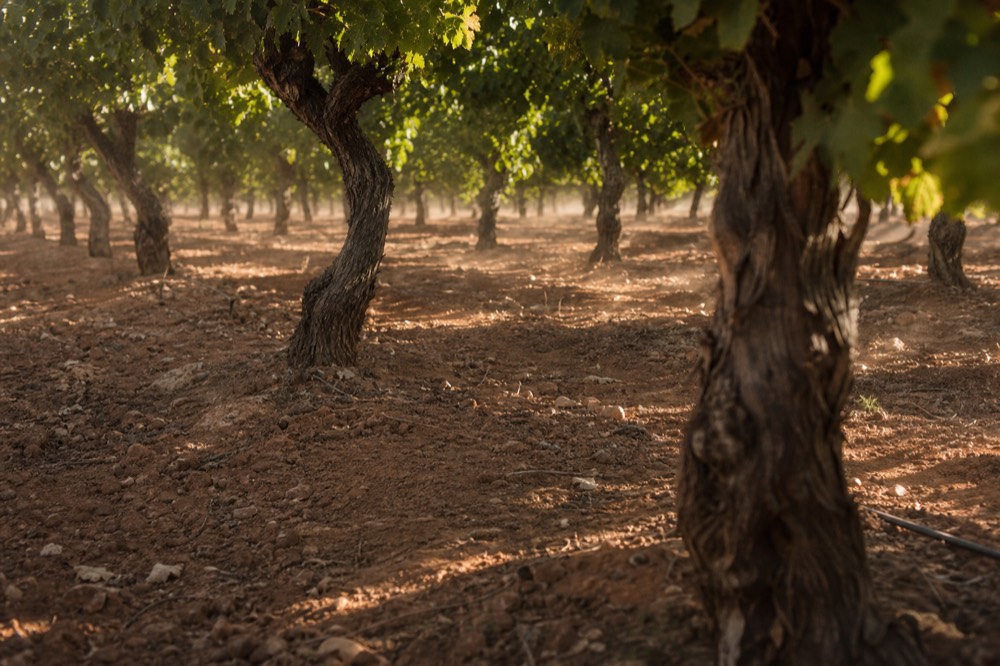
Cullen deserves a separate line because of how it farms. It is one of the region's biodynamic and carbon-neutral estates, working the vineyard on a lunar calendar with its own kitchen garden feeding the restaurant. That approach, once fringe, now shapes a whole tier of boutique producers worth seeking out on a slower day.
| Founding-era estate | Planted | Claim to fame |
|---|---|---|
| Vasse Felix | 1967 | The region's first; number one on the current Halliday Top 100 |
| Moss Wood | 1969 | Cult Wilyabrup Cabernet |
| Cullen | 1971 | Biodynamic benchmark, structured Cabernet |
| Cape Mentelle | 1970s | Founding estate; Cabernet and Zinfandel |
| Leeuwin Estate | 1970s | Art Series Chardonnay; the concert lawn |
What Each Cellar Door Is Known for
No two cellar doors sell the same day. Some are built for a seated flight and a long lunch, some for a quick benchtop tasting, and a few, like Moss Wood, run by appointment for serious buyers. Matching the room to your mood matters more than chasing a single famous name.
Think in styles rather than rankings. If you want architecture and a gallery, Vasse Felix and Howard Park deliver. If you want food at the centre of the day, Leeuwin, Cullen and Xanadu all run kitchens, which is the reason the cellar doors with restaurants attached tend to fill the middle of most itineraries. For a lower-key, off-the-headline experience, the boutique makers reward the detour.
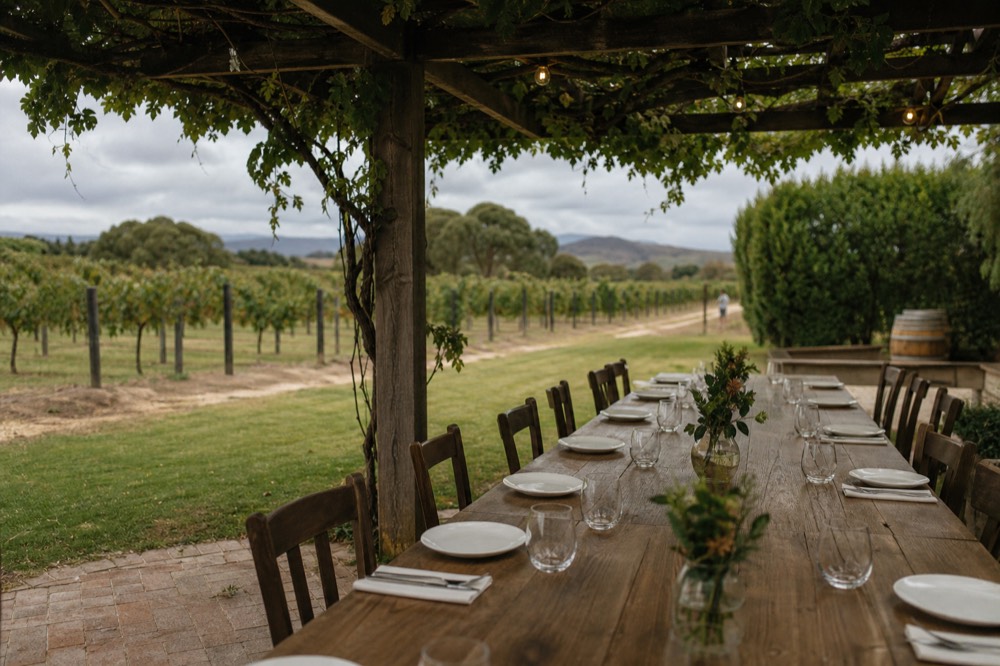
A boutique-focused day is its own thing entirely. Instead of the marquee estates, it includes a guided blind tasting and works through smaller cellar doors most first-timers drive straight past. That format suits return visitors who have already done the classic circuit and want the makers behind the labels.
| If you want | Look at | Why |
|---|---|---|
| The full flagship experience | Vasse Felix, Leeuwin, Cullen | Founding names, kitchens, seated tastings |
| A trophy Cabernet story | Xanadu, Moss Wood | Reserve reds with real pedigree |
| Architecture and range | Howard Park, Vasse Felix | Design-led rooms, wide price spread |
| Boutique and lesser-known | Small Wilyabrup and Karridale makers | Fewer crowds, personal pours |
| Food at the centre | Cullen, Xanadu, Leeuwin | Long lunches, garden-to-plate menus |
What a Tasting Day Actually Costs, and How It Runs
Most cellar doors now charge for tastings: roughly A$10 to A$20 for a standard flight of five or six wines, and A$25 to A$50 or more for a seated or premium experience. The fee is usually waived if you buy a bottle. A guided full day typically runs about seven hours, visits three to six producers, and often includes lunch.
The paid-tasting norm surprises visitors who remember free pours. It is standard now, and the redeemable-on-purchase structure means a genuine buyer rarely pays twice. Australia does not run on tipping, so the fee is the fee. Budget a little for lunch unless your tour includes it, and remember that a "flight" is several 30 to 50 millilitre pours that add up fast, which matters if anyone is considering driving.
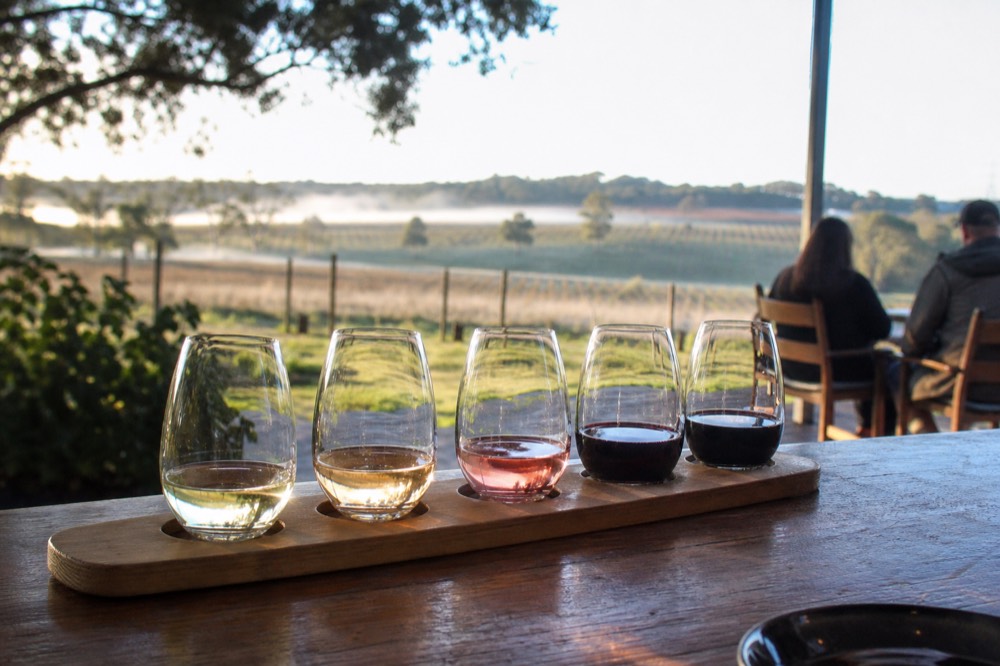
That last point is the whole case for a driven day. Western Australia's full-licence blood-alcohol limit is 0.05, and it drops to zero for provisional and learner drivers, so a serious tasting and a self-drive plan do not sit together. A guided day removes the maths entirely. For a mid-range small-group version with lunch built in, a compact small-group day with a brewery lunch sits neatly between the budget and premium ends.
| Experience | Typical fee | Lunch | Notes |
|---|---|---|---|
| Standard flight (5 to 6 wines) | A$10 to A$20 | Not included | Usually waived on purchase |
| Seated or premium tasting | A$25 to A$50+ | Sometimes | Booking recommended |
| Full-day tour, budget | Tour price covers tastings | Often included | 3 to 6 producers, about 7 to 9 hours |
| Full-day tour, premium | Tour price covers tastings | Included, sit-down | Smaller group, higher-end doors |
| Day trip from Perth | Tour price covers stops | Varies | About 6 hours of driving return |
Which Tour Reaches Which Cellar Doors?
The tours split by pace and price, not by which famous door they hit. A budget full day and a premium full day cover similar ground; the difference is group size, the calibre of the cellar doors, and whether lunch is a platter or a sit-down. Boutique days trade the marquee names for smaller makers.
Here is the honest mapping. A classic full day is the workhorse: a relaxed nine-hour loop with lunch and tastings included, at the friendliest price on this list, run at a pace that suits first-timers. Step up to the premium day and the group shrinks, the cellar doors get higher-end, and lunch becomes a proper sit-down affair for people who will pay more for a quieter day.
Group size is the other quiet variable. Shared minibus days usually cap somewhere around 8 to 13 passengers, while the premium and private options run smaller, which changes how long you linger at each bench. Pickups matter too: most full days collect from Margaret River town, Dunsborough, Yallingup, Busselton or Cowaramup, so where you stay shapes which tours are even practical. Check the pickup list against your base before you book, because a door-to-door start is half the value of handing over the driving.
Prefer to base the whole trip in Perth? The region also runs as a long day trip from the city, threading Busselton Jetty, a founding-winery tasting and the Wilyabrup coast, with the driving handled for you. The trade-off is real: roughly 270 kilometres and about three hours each way. If that is your situation, the door-to-door day trip from Perth sets out the pickup points and the timing.
| Tour | Style | What it covers | Duration | Rating |
|---|---|---|---|---|
| Harvest Full-Day Wine Tour | Classic, best value | Several cellar doors, lunch, tastings | 9 hours | 5.0 (55) |
| Harvest Premium Wine Tour | Premium small group | Higher-end doors, sit-down lunch | 9 hours | 5.0 (7) |
| The Full Bottle | Food and makers | Small producers, beer or wine, chocolate, distillery | 7 hours | 4.8 (263) |
| Tannin Road Winery Tour | Small group | Award-winning doors, brewery lunch | 6.5 hours | 4.9 (340) |
| Waves of Wine Boutique | Boutique | Blind tasting, smaller makers, lunch | 6 hours | 4.9 (107) |
| Hidden Gems of Margaret River | Boutique plus farm | Boutique doors, olive-farm lunch, animals | 7 hours | 5.0 (925) |
| Margaret River from Perth | Day trip | Jetty, founding winery, coast | Full day | 4.4 (72) |
For the six food-and-boutique and brewery days above without a listed price, the current figure sits on the live listing rather than in a table like this, so check it there before you book.
The Awards That Back the Region Up
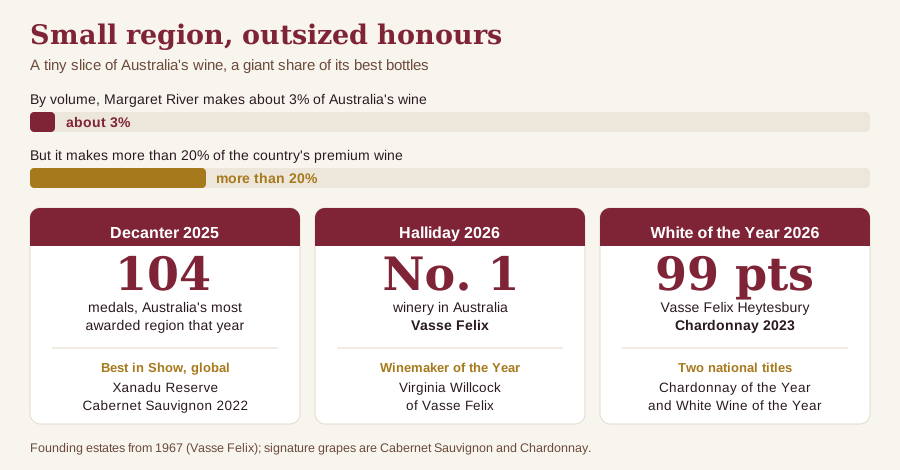
Margaret River is not coasting on reputation. At the 2025 Decanter World Wine Awards it was Australia's most awarded region with 104 medals, and a local Cabernet took the single top global prize. The 2026 Halliday Wine Companion then named a Margaret River winemaker its Winemaker of the Year and ranked a Margaret River estate number one in the country.
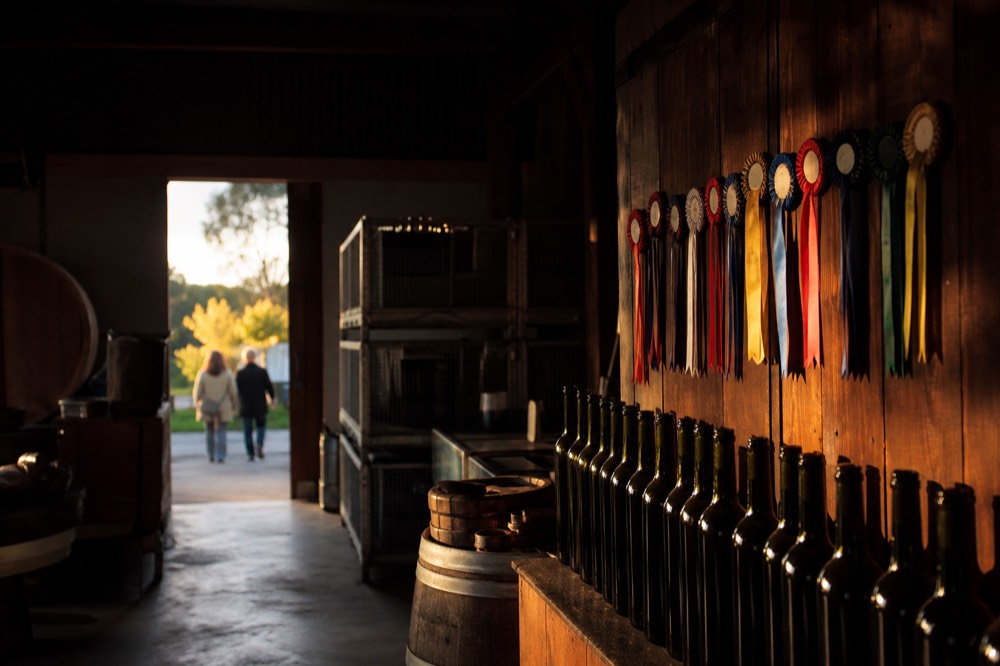
These are the accolades that justify the trip, and they are recent enough to matter. The Decanter World Wine Awards result put the region ahead of every other in the country that year. If you want a single stat to carry into a tasting, it is the premium-wine share: a tiny volume region punching at the very top of Australian fine wine. The breakdown of the region's most famous wines puts the grapes and the trophies side by side.
How to Actually Plan the Day
Pick a base, pick a district cluster, and let a driver connect the dots. Most visitors get the best day by anchoring in Wilyabrup or Wallcliffe, where the flagship doors sit closest together, then adding one food stop and one boutique detour. Three to four cellar doors is a full, unhurried day.
The mistake first-timers make is trying to see everything. A hundred cellar doors is a lifetime of visits, not a day's worth. Better to choose a theme, whether that is the founding estates, a food-led loop, or a boutique crawl, and go deep on four rooms than skim eight. A guide who runs these routes weekly will read the day better than any itinerary you build cold, and will slot in lunch and a producer stop without you touching a map.
It also helps to know a good day here is rarely wine and nothing else. Most full-day itineraries fold in a stop or two beyond the vines: a chocolate factory, an olive-oil or cheese tasting, a brewery or a distillery, and a proper sit-down lunch somewhere in the middle. That variety is deliberate, because eight straight tasting flights would flatten anyone's palate by mid-afternoon. Pace yourself, drink water between flights, and treat the food stops as part of the point rather than filler. The region is as much a produce basket as a wine list, and the better days lean into that. For the most local expression of that, days that pair cellar doors with bushtucker put native ingredients alongside the wine.
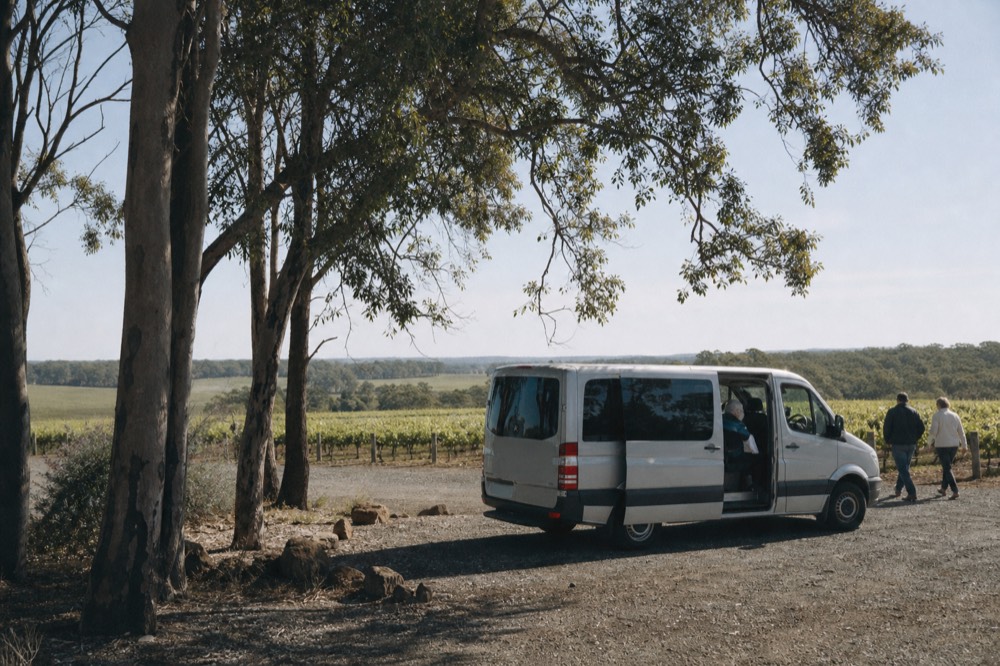
Whichever way you cut it, the region rewards a planned day over a wandered one. That is the whole reason these Margaret River wine tours exist, and why handing over the driving is the single decision that changes a good day into a great one. When you are ready to lock a date, the classic full day is the safest first pick.
Common Questions
How many wineries can you visit in a day in Margaret River?
A guided full day typically reaches three to six cellar doors across about seven to nine hours. Because the doors sit 10 to 25 minutes apart, three or four unhurried stops with a lunch break is the realistic sweet spot rather than a race through eight.
Which is the most famous winery in Margaret River?
Vasse Felix is the region's founding estate, planted in 1967, and it currently sits at number one on the Halliday Top 100 Wineries list. Cullen, Moss Wood, Leeuwin Estate and Cape Mentelle are the other founding-era names, and Xanadu won Decanter's top global prize in 2025.
Do Margaret River cellar doors charge for tastings?
Most do now. A standard flight of five or six wines usually costs A$10 to A$20, and seated or premium experiences run A$25 to A$50 or more. The fee is commonly waived if you buy a bottle, and Australia does not run on tipping.
Are the wineries close enough to walk between?
No. The wine region runs about 110 kilometres north to south and only 27 kilometres wide, with cellar doors dispersed along rural roads. Drives between them run 10 to 25 minutes or more, so there is no walkable cluster of multiple doors.
What is Margaret River wine best known for?
Cabernet Sauvignon and Chardonnay above all, plus Sauvignon Blanc-Semillon blends and Cabernet-Merlot. The region makes only around 3 percent of Australia's wine by volume but more than 20 percent of its premium wine, in a maritime climate often compared to Bordeaux.
Is it better to self-drive or take a tour?
A tour, if you plan to taste seriously. Western Australia's blood-alcohol limit is 0.05 for full-licence drivers and zero for learner and provisional drivers, and a tasting flight is several small pours that accumulate quickly. A driven day also removes the rural navigation and the fatigue.
Choose Your Wine Experience
Have your travel date in mind? Walk organic vineyards, taste from the barrel and explore Voyager’s underground cellar. Check your date before arranging the rest of your day.
Discover VoyagerTwo-hour private experience at Voyager. Paired snacks included; restaurant lunch is extra and subject to availability. Arrange your own transport.
Choose a date to see Viator’s scheduled departures. Final availability and price are confirmed on Viator.
Tailor This Choice And Compare Options
Initial editorial choice. Adjust these options to compare the listed experiences; confirm your exact pickup and suitability when booking.
Leeuwin Wine And Food Experience · 3.5 hours. Enjoy Leeuwin’s art, a tutored wine flight and a three-course restaurant lunch. Meet at Leeuwin Estate; arrange your own transport. Allow three and a half hours. Minimum age 18.
Your Own Winery And Brewery Route · 6 hours. Choose your own venues with a private vehicle and driver for a group of three to eight. Six-hour charter for three to eight people. Meals, drinks and tasting fees are extra. Agree the route and pickup with the operator before booking.